Delayed disposal of farm inputs and irrigation equipment held by the Malawi Enterprise Development Fund (Medf) has resulted in a loss estimated at K5.2 billion, a Board of Survey report has revealed.
The disposal was delayed pending a Parliament-ordered forensic audit.
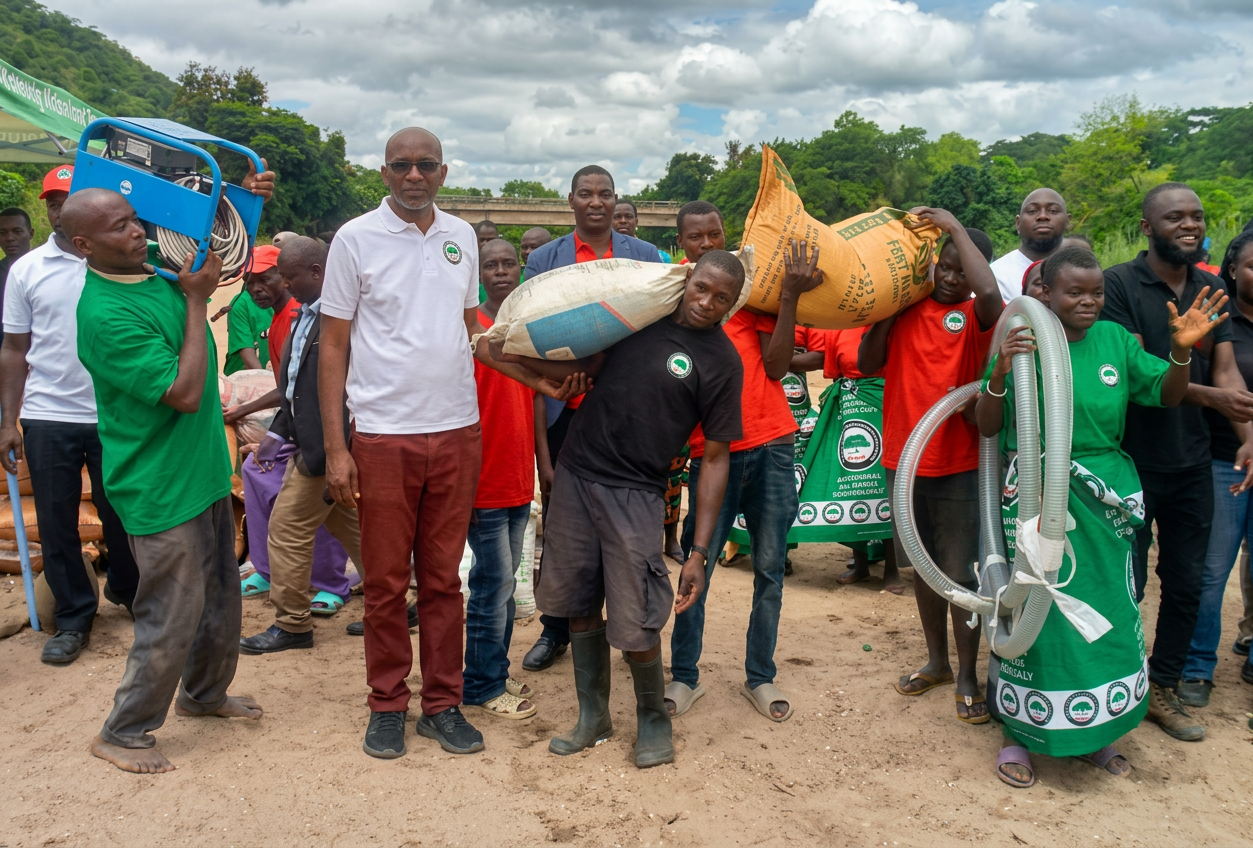
In the report dated July 14 2026, the value of agricultural stocks procured for public loan programmes is indicated to have fallen from about K16 billion in January to K10.8 billion due to prolonged storage that damaged seeds, fertilisers and other inputs.
Reads the report in part: “All maize seed and other farm inputs that have deteriorated beyond recovery and are no longer fit for use should be written off and disposed of in accordance with approved disposal procedures…
“Retaining unusable stock creates unnecessary storage costs and exposes the institution to additional risks.”
The findings have come months after Public Accounts Committee (PAC) of Parliament halted Medf’s planned disposal of surplus farm inputs valued at about K15 billion, insisting that a forensic audit be completed first to safeguard public resources.
Medf had warned at the time that every month of delay would reduce the value of the stock.
Compiled after an assessment by officials from the Ministry of Agriculture, Irrigation and Water Development, the Pesticides Control Board and Medf, the report warns that some liquid fertilisers are due to expire within months, raising the prospect of further losses if disposal is delayed again.
The 57-page report produced by a team led by Ministry of Agriculture soil scientist Moses Munthali said they found extensive damage to maize and bean seed caused by prolonged storage, damp conditions and weevil infestation.
Among the losses, 39 150 maize seed packets in Mponela, 12 225 maize seed packets and 1 050 bean seed units in Mzimba were declared beyond recovery.
Another 1 515 bags at Chinkhoma, 520 bags at Kasungu and 1 850 units in Salima were also found damaged.
Irrigation equipment accounted for the largest share of the remaining inventory, with a discounted value of K4.62 billion, followed by maize seed (K1.85 billion) and granular fertiliser (K1.70 billion).
The report also classified some damaged inputs as zero-value write-offs and recommended immediate disposal of unusable stocks while subjecting other items to further testing.
It warned that Tara liquid fertiliser stored in Rumphi, Mangochi, Machinga and Blantyre is due to expire next month and urged management to prioritise its disposal.
Meanwhile, experts have decried the losses, describing them as a reflection of deeper governance failures.
Lilongwe University of Agriculture and Natural Resources Centre for Agricultural Research and Development director Innocent Pangapanga described the losses as deplorable, particularly as the country braces for a possible El Niño-induced food crisis.
He urged Medf to work with the Ministry of Agriculture to channel usable inputs to Agricultural Development Divisions for winter cropping instead of disposing of them.
For his part, Centre for Social Accountability and Transparency executive director Willy Kambwandira said the losses reflected deeper governance failures.
PAC chairperson Steve Malondera referred us to the Committee on Commissions, Statutory Corporations and State Enterprises, saying that although the PAC engaged Medf, it did not issue a report, but its sister committee did.
In an interview, Committee on Commissions, Statutory Corporations and State Enterprises chairperson Sylvester Ayuba James justified the delay, saying the verification exercise was necessary to establish the actual quantity of stock.
In a separate interview, Medf chief executive Kayisi Sadala confirmed receipt of the report and said it would first be submitted to relevant authorities for approval.
He said once approved, Medf will advertise the auction in newspapers indicating the reserve prices and allowing at least one week for the notice period before engaging a licensed public auctioneer to conduct the sale.
Said Sadala: “To ensure an orderly process, the auction will be conducted by region on scheduled dates. For example, the Northern Region first, followed by the Central, Eastern and Southern regions.
“Where practical, the items within each region will be consolidated at a central location to facilitate a more efficient and cost-effective auction process.”
Established on January 29 2005, the institution has evolved over the years from Malawi Rural Development Fund (Mardef) to Medf in 2014 and later Neef in 2020 before reverting to Medf earlier this year.